
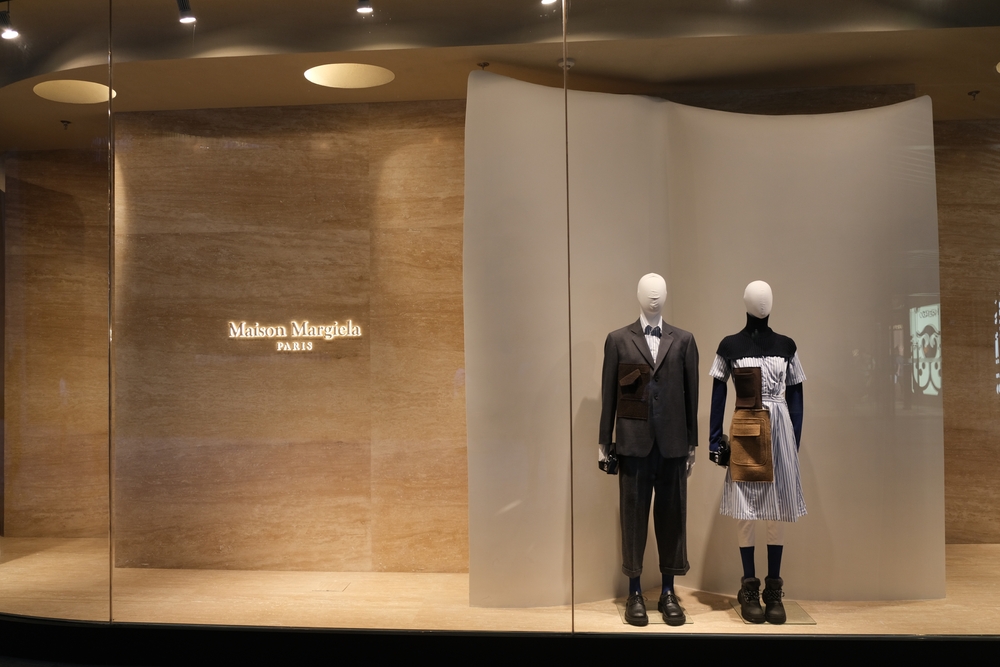
Credit: Shutterstock
Can a fashion label built on secrecy, subtlety, and almost stubborn individuality ever win over the entire world? It sounds like a contradiction—but that’s exactly the question hovering over Maison Margiela today.
For decades, the house has stood apart from the glittering machinery of global fashion. Founded by the elusive Martin Margiela, the brand rejected the spotlight entirely. No dramatic runway bows, no celebrity selfies, no designer-as-superstar energy. Instead, Margiela built a quiet revolution—models in masks, anonymous creators in white lab coats, and clothes that whispered rather than shouted.
Now, in a hyper-connected world where everything is shared, liked, and judged instantly, that same quiet philosophy faces a bold new test.
The Man Who Wasn’t Meant to Be Seen
When Glenn Martens took over as creative director in 2025, he expected to remain in the shadows, just like his predecessors. But fashion in 2026 doesn’t really allow for invisibility. Designers are personalities, brands are content machines, and audiences expect access.
Martens found himself stepping into the frame—literally.
Yet instead of abandoning Margiela’s DNA, he’s trying to stretch it. His challenge isn’t to make the brand louder, but to make its quietness resonate globally.
From Niche to Nowhere and Everywhere
Margiela has always spoken to a select crowd—fashion insiders, collectors, and those who appreciate the poetry of deconstruction. But Martens is asking a bigger question: what if that poetry could be understood by everyone?
His strategy isn’t about simplifying the brand. It’s about opening it up.
By taking shows beyond Paris and into cities like Shanghai, and offering public exhibitions, workshops, and experiences, he’s turning Margiela into something people can engage with, not just admire from afar. You may not own a piece, but you can still step into its world.
And that’s a subtle but powerful shift: from exclusivity to accessibility—without losing identity.
Redefining Luxury in a Loud World
Today, “luxury” often means logos, waiting lists, and viral handbags. Martens is pushing a different idea.
For him, luxury is thoughtfulness. It’s turning a thrifted fabric into couture. It’s dipping a dress in beeswax to give it a ghostly, almost surreal finish. It’s making something strange feel meaningful.
This kind of luxury doesn’t beg for attention—it earns it.
And maybe that’s exactly what makes it globally appealing. In a world saturated with sameness, originality stands out.
Even Celebrities Can Disappear
Celebrity culture is unavoidable in modern fashion. A single appearance by someone like Kim Kardashian can send a brand skyrocketing across social feeds.
But Margiela approaches fame differently. Instead of celebrities transforming the brand, the brand transforms them.
When Kardashian wears Margiela, she isn’t just endorsing it—she’s stepping into its identity, becoming part of its artistic language. The spotlight remains, but it shifts focus.
A Dog Named Murphy and the Power of Softness
In the middle of all this high-concept thinking, there’s something refreshingly human: Murphy, the house’s therapy dog, dressed in his own tiny white uniform.
It’s a small detail, but it says a lot. Fashion doesn’t have to be cold or intimidating. Even the most conceptual brand can have warmth, humor, and heart.
Sometimes, global appeal starts with something as simple as making people feel comfortable.
Standing Out Without Selling Out
The biggest risk in going global is dilution—becoming so widely appealing that you lose what made you special in the first place.
Martens seems aware of that trap. He refuses to design just for viral moments or social media buzz. He’s not chasing trends; he’s building ideas.
And yes, that means criticism will come. In today’s online world, bold creativity often meets loud backlash. But playing it safe, he argues, is far more dangerous. Safe fashion fades. Distinct fashion endures.
So, Can a Cult Brand Conquer the World?
The answer isn’t a simple yes or no.
A cult brand like Maison Margiela doesn’t need to become “for everyone” in the traditional sense. It doesn’t need mass approval or universal understanding.
What it can do is invite the world in—on its own terms.
By staying true to its identity while opening new doors, Margiela proves something important: global appeal doesn’t have to mean losing your soul. Sometimes, the most unique voices travel the farthest.
And in a world full of noise, a little mystery might just be the most powerful statement of all.