
Credit: Shutterstock
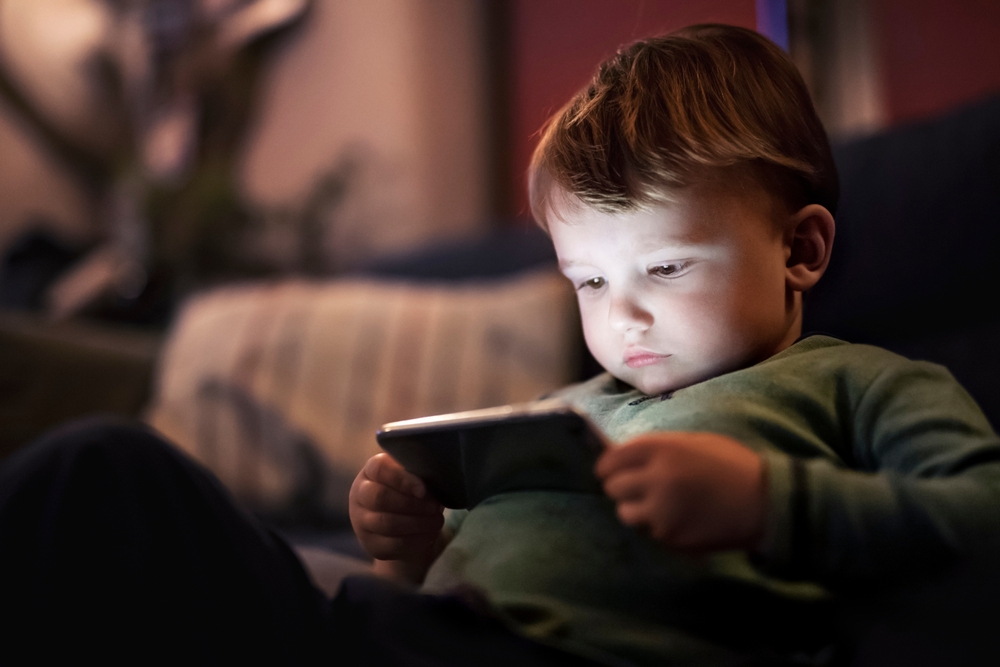
If you’re a parent of a toddler, chances are screens are already part of your daily routine. A cartoon while dinner cooks, a nursery rhyme on a phone in the car, or a video call with grandparents — screens have quietly woven themselves into family life. So the big question many parents are asking isn’t whether screens should be used, but how much is too much.
That’s why the government’s announcement that parents of under-fives in England will soon receive official screen time guidance has caught so much attention. Set to be published in April, this will be the first time clear, national advice is offered for children in this age group — and for many families, it can’t come soon enough.
Why screen time is under the spotlight
Recent government research revealed just how common screen use has become among the very youngest children. Almost all children under the age of two are now watching screens daily. While that may sound surprising, for many parents it simply reflects modern reality.
However, the same research raised concerns. Parents, teachers and nursery staff reported that some children are finding it harder to concentrate, communicate, or engage in conversation. In fact, children with the highest screen exposure — around five hours a day — were found to use significantly fewer words than those who spent under an hour a day watching screens.
These findings don’t mean screens are “bad” or that parents are doing something wrong. They do, however, suggest that how and how often screens are used can matter, especially during the crucial early years when language, attention and social skills are rapidly developing.
Guidance, not guilt
Education Secretary Bridget Phillipson has been careful to strike a reassuring tone. Screens, she says, are part of family life now. Even she admits to giving in to the occasional “just one more episode” moment — something most parents will recognise instantly.
The aim of the new guidance isn’t to shame parents or demand digital detoxes. Instead, it’s about offering practical, evidence-based support. A national working group, led by Children’s Commissioner Dame Rachel de Souza and education adviser Professor Russell Viner, will shape the advice after listening to parents, early years professionals and children themselves.
Importantly, the guidance will also help families find alternatives to screen time — ideas that don’t require expensive toys or endless energy, just a little inspiration.
Not all screen time is the same
One reason the screen time debate can feel confusing is that the term itself is incredibly broad. Watching a fast-paced video alone is very different from sharing a story on a tablet with a parent, video-chatting with relatives, or playing an educational game together.
Some experts argue that the quality of screen time matters more than the quantity. Research suggests that “co-viewing” — where adults watch or play alongside children and talk about what’s happening — can reduce potential downsides and even support learning.
That’s why the upcoming guidance is expected to focus less on rigid limits and more on mindful use. Think fewer passive hours, more shared moments, and plenty of time for talking, singing, playing and exploring the world offline.
Reading, talking and inequality
One striking finding from the research highlights a wider issue. By age two, children from higher-income families are far more likely to be read to daily than those from lower-income households. This gap matters because reading, conversation and play are some of the most powerful tools for early learning.
Charities like Kindred Squared have welcomed the government’s plans, pointing out that many parents want help — not lectures. Their polling shows that 40% of parents believe reducing screen time could better prepare children for starting school. What families need, they argue, is trusted advice that fits real life.
Is screen time really that harmful?
While concerns around young children are growing, it’s worth noting that the science on screen time — especially for older children — is far from straightforward.
Some high-profile warnings in the past painted screens as a major threat to developing brains. But more recent research has challenged those claims, suggesting the evidence is mixed and sometimes overstated. Large studies have found little direct link between screen use and poor mental health, and some digital activities — such as gaming or social connection online — can even boost wellbeing.
Experts also caution against confusing correlation with causation. For example, loneliness, rather than screen time itself, may be a key factor behind anxiety or low mood in young people.
For under-fives, though, there is broader agreement on one point: young children learn best through human interaction. Facial expressions, back-and-forth chatter, imaginative play and shared attention all play a vital role in healthy development — and these experiences can’t be replaced by a screen.
Moving forward with balance and confidence
Alongside the new guidance for parents, politicians are continuing to debate wider restrictions on technology, including smartphone bans in schools and limits on social media access for teenagers. While opinions differ on how far these measures should go, most experts agree on one thing: there’s no single fix.
Former prime minister Rishi Sunak recently described the issue as complex, and he’s right. Technology isn’t going away, and trying to ban it entirely may only make it more tempting.
For parents of under-fives, the message is refreshingly simple. Screens aren’t the enemy — but they shouldn’t crowd out the basics. A story before bed, a song in the kitchen, a conversation on the walk to the park — these small, everyday moments still matter most.
When the new guidance arrives in April, it won’t have all the answers. But for parents navigating tantrums, tablets and tired evenings, a little clear, friendly advice might be exactly what’s needed.