
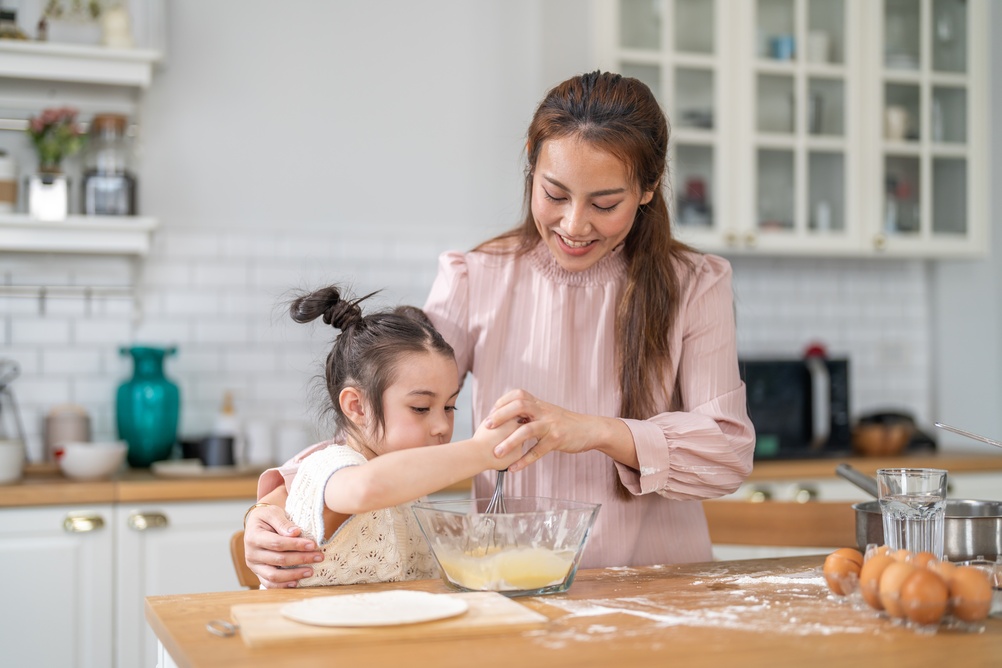
Credit: Shutterstock
For years, many parents believed that being a “good mom” meant doing everything perfectly. Every nap had to happen on time, every milestone had to be tracked, every activity had to be planned, and every parenting decision had to be backed by research. While this approach may look impressive on paper, it often leaves parents feeling exhausted.
Now, a growing number of moms are embracing a different philosophy—one that values connection over perfection. Welcome to the world of beta parenting, where flexibility, trust, and enjoying the parenting journey matter just as much as raising confident, capable kids.
What Is a Beta Mom?
Despite the name, being a beta mom has nothing to do with being less confident or less involved. Instead, it describes a parenting style that focuses on being present rather than being perfect.
Beta moms understand that children don’t need flawless parents—they need emotionally available ones. Instead of trying to control every detail of their child’s life, they allow room for exploration, mistakes, and natural learning experiences.
This doesn’t mean they stop guiding their children. Rather, they choose thoughtful support over constant supervision.
Choosing Presence Instead of Perfection
Many parents discover beta parenting after experiencing the stress of trying to do everything “right.”
The endless pressure to follow strict schedules, compare milestones, and meet unrealistic expectations can quickly turn parenting into a full-time performance instead of an enjoyable experience.
Beta parenting encourages parents to step away from that mindset. Instead of asking, “Am I doing enough?” they begin asking, “Are we enjoying this moment together?”
That simple shift often brings more joy into everyday family life.
Signs You Might Already Be a Beta Mom
Beta parenting isn’t about following a strict set of rules. Instead, it reflects a relaxed and intentional approach to raising children.
Some common characteristics include:
- Letting go of perfectionism.
- Trusting your parenting instincts.
- Encouraging children to solve age-appropriate problems independently.
- Allowing kids to make mistakes without immediately stepping in.
- Avoiding unnecessary comparisons with other families.
- Saying no to overscheduling every hour of the week.
- Accepting that messy play is part of healthy childhood.
- Focusing on meaningful family moments instead of social media-worthy ones.
- Setting healthy boundaries while remaining warm and approachable.
The goal isn’t to create the perfect childhood—it’s to build a secure, supportive environment where children can thrive.
Why More Parents Are Embracing Beta Parenting
Modern parenting comes with more information—and more pressure—than ever before.
Social media constantly showcases picture-perfect families, parenting influencers share endless advice, and comparison has become almost unavoidable.
Many parents are beginning to realize that chasing perfection isn’t making them happier. In fact, it’s often increasing stress and self-doubt.
Beta parenting offers a refreshing alternative. It encourages parents to trust their instincts instead of trying to meet impossible standards. Rather than controlling every outcome, parents learn to accept that uncertainty is a natural part of raising children.
This shift also reflects changing family priorities. Today’s parents are increasingly choosing emotional well-being, meaningful relationships, and work-life balance over unrealistic expectations.
The Benefits for Parents
One of the biggest advantages of beta parenting is reduced stress.
When parents stop trying to control every situation, they often experience greater peace of mind. They spend less time worrying about doing everything perfectly and more time enjoying everyday moments with their children.
Other benefits may include:
- Lower parenting anxiety.
- More confidence in personal decision-making.
- Less pressure to keep up with parenting trends.
- Stronger emotional connections with children.
- Greater enjoyment of family life.
Many parents also report feeling more authentic because they’re no longer trying to fit someone else’s definition of a “perfect parent.”
The Benefits for Children
Children benefit from beta parenting as well.
When kids are given opportunities to make choices, solve problems, and experience natural consequences, they develop important life skills that can’t be taught through constant instruction.
Potential benefits include:
- Increased independence.
- Better problem-solving abilities.
- Greater self-confidence.
- Improved emotional resilience.
- Stronger decision-making skills.
- More creativity through unstructured play.
Instead of relying on adults to solve every challenge, children gradually learn that they are capable of finding solutions themselves.
Flexibility Doesn’t Mean a Lack of Rules
One common misunderstanding is that beta parenting means being overly permissive.
In reality, healthy beta parenting still includes boundaries, routines, and clear expectations. Children continue to need structure, consistency, and emotional security.
The difference is that beta moms don’t feel the need to control every small decision or rescue children from every disappointment.
They know that growth often happens through small challenges.
The key is finding the balance between giving children freedom and providing dependable support whenever it’s needed.
Can Beta Parenting Go Too Far?
Like any parenting style, beta parenting works best when practiced with balance.
Being flexible shouldn’t turn into being uninvolved. Children still need adults who provide guidance, enforce reasonable rules, and create a sense of stability.
If parents avoid setting limits altogether, children may struggle with boundaries or feel uncertain about expectations.
The healthiest version of beta parenting combines independence with reassurance, allowing children to explore while knowing their parents are always there when it truly matters.
How to Start Beta Parenting
If the idea of beta parenting appeals to you, there’s no need to overhaul your parenting style overnight.
Small changes can make a meaningful difference.
Start by:
- Giving your child opportunities to solve simple problems independently.
- Reducing the urge to step in immediately when challenges arise.
- Spending less time comparing your family to others.
- Letting go of unnecessary perfection.
- Focusing on quality time instead of perfectly planned activities.
- Trusting your instincts more often.
- Remembering that every child develops at their own pace.
Even small shifts toward greater flexibility can help create a calmer, happier home.
The Bottom Line
Beta parenting isn’t about doing less—it’s about focusing on what truly matters.
By letting go of perfection, parents create more space for laughter, connection, curiosity, and growth. Children gain confidence through independence, while parents enjoy a healthier relationship with both their kids and themselves.
In a world where parenting often feels like a competition, beta moms are proving that sometimes the best thing you can do is relax, trust yourself, and simply be present.
Because the most memorable moments of childhood are rarely the perfectly planned ones—they’re the beautifully imperfect moments shared together.