
Credit: Shutterstock
Dating used to feel relatively straightforward. You met someone, went on a few dates, decided whether you liked each other, and eventually became a couple—or went your separate ways.
In 2026, things are rarely that simple.
You might text someone every morning, see them several times a week, share personal secrets, make weekend plans and even act like a couple in public. But ask, “So, what are you two?” and suddenly nobody knows what to say.
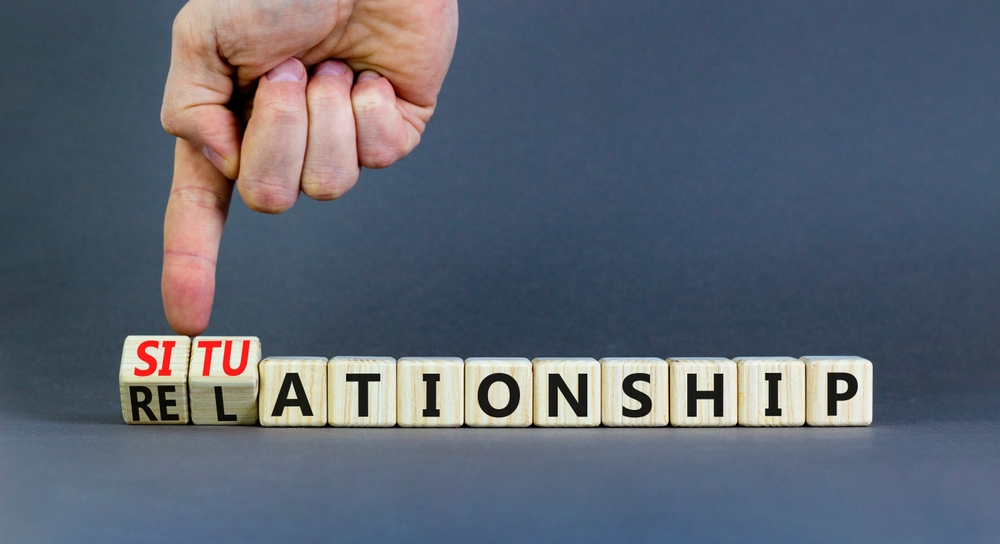
Welcome to the world of the situationship.
A situationship generally describes a romantic or sexual connection that feels like a relationship but doesn’t have a clearly defined label, commitment or agreed-upon future. And while the term has been around for several years, it has become an increasingly familiar part of modern dating culture. A 2026 study published in Sexuality & Culture found that 34.1% of the emerging adults in its sample reported that one of their recent romantic relationships had been a situationship.
So, why are these undefined relationships everywhere?
What Exactly Is a Situationship?
Think of a situationship as the space between “we’re just talking” and “we’re officially together.”
There is usually attraction, emotional closeness or physical intimacy. You may talk constantly and know surprisingly personal details about each other’s lives. The confusing part is that the relationship doesn’t come with a clear agreement about what it actually is.
One person might think, “We’re basically dating.”
The other might think, “We’re just enjoying each other’s company.”
And both people can technically continue doing exactly what they’re doing without having the uncomfortable “What are we?” conversation.
That ambiguity is what separates situationships from more clearly defined arrangements such as friends-with-benefits relationships. Situationships often have fewer agreed-upon rules around exclusivity, expectations or where things are headed.
Dating Apps Made Endless Options Feel Normal
One of the biggest reasons situationships have flourished is the sheer number of romantic options people can see every day.
Dating apps already provide an endless stream of potential matches. Social media adds another layer. Someone can be scrolling TikTok or Instagram and encounter hundreds of attractive, interesting or seemingly compatible people within minutes.
Relationship researcher Andrea Meltzer of Florida State University has pointed to this constant exposure to potential alternatives as one factor that can make commitment more difficult. When people feel as though another option is always one swipe or scroll away, settling into one relationship can feel like closing the door on countless possibilities.
That doesn’t mean people are deliberately keeping a backup partner.
Sometimes, they simply don’t feel enough certainty to choose.
Commitment Can Feel Like a Huge Decision
Modern relationships aren’t happening in a vacuum.
People are thinking about careers, money, housing, relocation, personal goals and emotional well-being at the same time they’re trying to figure out their love lives.
For someone who isn’t sure where they’ll be living next year or what they want their career to look like, promising a long-term relationship can feel intimidating.
A situationship can seem like the comfortable middle ground.
You get companionship without immediately having to answer questions about marriage, children, living together or forever.
The problem is that avoiding those conversations doesn’t necessarily eliminate uncertainty. Sometimes it simply postpones it.
Fear of Getting Hurt Is Playing a Role
Nobody enjoys heartbreak.
After watching relationships end badly—or experiencing it themselves—some people become much more cautious about becoming emotionally invested.
A situationship can provide a psychological safety net.
You can tell yourself, “We’re not technically together,” which can make rejection or a breakup feel less frightening.
But emotions don’t always follow labels.
You can become deeply attached to someone even when you’ve agreed not to call the relationship a relationship.
And that’s where things can get complicated.
Social Media Has Changed How Relationships Develop
Modern dating doesn’t stop when the date ends.
You can wake up to a good-morning text, watch someone’s Instagram story, react to their post, send them a TikTok, share a meme, FaceTime at night and then see them in person—all without ever having a conversation about exclusivity.
Technology makes maintaining emotional closeness incredibly easy.
It also makes ambiguity easier to maintain.
A 2026 study examining situationships found that communication frequency was linked with trust, but situationship status itself was associated with lower trust in partners across several communication settings. Interestingly, very frequent texting sometimes appeared to compensate for some of that uncertainty.
In other words, texting someone all day can make a connection feel extremely intimate—even when the relationship itself remains undefined.
The “Almost Relationship” Can Be Surprisingly Comfortable
Here’s the part people don’t always admit: situationships can have genuine benefits.
They can provide:
- Companionship
- Emotional support
- Affection
- Physical intimacy
- Someone to spend time with
- Freedom from traditional relationship expectations
For someone who isn’t ready for a serious relationship, that arrangement may initially feel ideal.
The trouble begins when the two people want different things but never discuss them.
One person may quietly hope the relationship becomes official.
The other may be perfectly happy keeping things casual.
Neither necessarily has bad intentions. They simply may not have the same destination in mind.
But Are People Actually Rejecting Love?
Not necessarily.
This is one of the biggest misconceptions about dating in 2026.
Gen Z, in particular, is often portrayed as uninterested in traditional romance. But recent Match Group research paints a different picture: 80% of Gen Z respondents said they believe they will find true love, while 74% said they believe they will get married.
So the issue isn’t necessarily that people don’t want relationships.
They may simply want to approach them differently.
Younger daters are increasingly experimenting with gradual commitment, emotional compatibility and smaller signs of connection before jumping into traditional relationship milestones. Tinder’s 2026 research describes these as “micro-commitments”—small signals of growing seriousness rather than an immediate leap into an official relationship.
That’s an important distinction.
People may still want love. They just don’t necessarily want to rush into defining it.
The Problem With Staying in Limbo
A situationship isn’t automatically unhealthy.
If two people genuinely agree on what they’re doing, communicate openly and have compatible expectations, there doesn’t have to be anything wrong with an unconventional relationship.
The problem is unspoken expectations.
If you’re constantly wondering:
“Does this person actually like me?”
“Are they seeing someone else?”
“Why won’t they call me their partner?”
“Are we eventually going to become official?”
“Am I wasting my time?”
…then the ambiguity may be costing you more emotionally than it’s giving you.
Research and relationship experts have increasingly connected situationship ambiguity with lower satisfaction and poorer well-being, particularly when communication and expectations remain unclear.
The “What Are We?” Conversation Is Making a Comeback
Interestingly, 2026 may not simply be the year of situationships.
It may also be the year people start getting tired of them.
Alongside the popularity of ambiguous dating, there’s growing interest in intentional dating—being clearer about boundaries, expectations and long-term goals earlier in the process.
That creates an interesting contradiction.
People want freedom, but they also want emotional security.
They want independence, but they still want intimacy.
They don’t necessarily want to rush into commitment, but they don’t want to spend six months wondering whether they’re someone’s partner either.
In many cases, the solution isn’t choosing between “casual” and “serious.”
It’s simply being honest about which one you’re actually choosing.
How to Survive a Situationship Without Losing Yourself
If you’re currently in one, you don’t necessarily need to run for the hills.
Instead, ask yourself a few simple questions.
What do I actually want?
Don’t start with what the other person wants. Figure out your own answer first.
Am I genuinely comfortable with this arrangement?
There’s a big difference between enjoying something casual and pretending you’re okay with casual because you’re afraid asking for more will push someone away.
Have we actually discussed expectations?
You don’t need to demand a five-year plan after three dates. But if you’re emotionally invested, an honest conversation can prevent months of guessing.
Do their actions match their words?
Someone can text you constantly and still not want a relationship. Look at consistency, respect, communication and willingness to make space for you in their real life.
Am I waiting for them to change?
If you’ve been hoping that a situationship will magically transform into a committed relationship, it’s worth asking whether you’re responding to reality or potential.
Maybe Situationships Aren’t Taking Over—They’re Just Easier to See
The rise of situationships says something fascinating about dating in 2026.
Relationships haven’t necessarily disappeared. Labels haven’t necessarily become meaningless. And young people certainly haven’t given up on love.
Instead, the path to commitment has become less predictable.
Technology has expanded people’s choices. Social media has changed how intimacy develops. Economic uncertainty can make long-term planning harder. And greater awareness of boundaries has encouraged people to question traditional relationship scripts.
The situationship sits right in the middle of all of that.
It offers connection without immediately demanding certainty.
And sometimes that’s exactly what two people need.
But if one person wants a relationship and the other wants an indefinite “let’s see where this goes,” the lack of a label doesn’t make the difference disappear.
Ultimately, the healthiest dating trend of 2026 may not be situationships—or even traditional relationships.
It may simply be clarity.
Because you don’t need to know on the first date whether someone is your forever person.
But you probably deserve to know whether you’re both walking in the same direction.