
Credit: Shutterstock
You don’t need a long gym session or a collection of fancy equipment to start building a stronger core. In fact, just seven minutes can be enough to introduce your abdominal and stabilizing muscles to a simple, effective workout.
And while a toned stomach may be a nice bonus, core strength is about much more than appearance. Your core helps stabilize your spine and pelvis, supports your posture, improves balance, and contributes to everyday movements such as bending, walking, lifting, and reaching.
“The core is where all movement begins,” says Maricris Lapaix, a NASM-certified personal trainer in Los Angeles who leads workouts on the Centr app.
If you’re completely new to core training—or simply getting back into exercise after a break—this gentle routine is a great place to begin.
Why Core Strength Matters
Think of your core as your body’s central support system. It includes more than just your six-pack muscles. Your abdominal muscles work alongside muscles around your hips, pelvis, spine, and pelvic floor to help keep your body stable.
A stronger core can make everyday movements feel more controlled and can contribute to better balance, stability, and posture. It can also help support your back during physical activity.
Core training may be particularly useful as part of a well-rounded fitness routine. Research has also explored the connection between core strength and performance in activities such as running.
The best part? You don’t have to start with complicated exercises. Learning how to control your body during simple movements is an excellent first step.
Your 7-Minute Beginner Core Workout
This routine features five bodyweight exercises. Move slowly and focus on technique rather than trying to complete as many repetitions as possible.
Beginner tip: If seven minutes feels challenging at first, take short breaks between exercises. As you become more comfortable, you can gradually reduce your rest time.
1. Dead Bug
Credit: Shutterstock
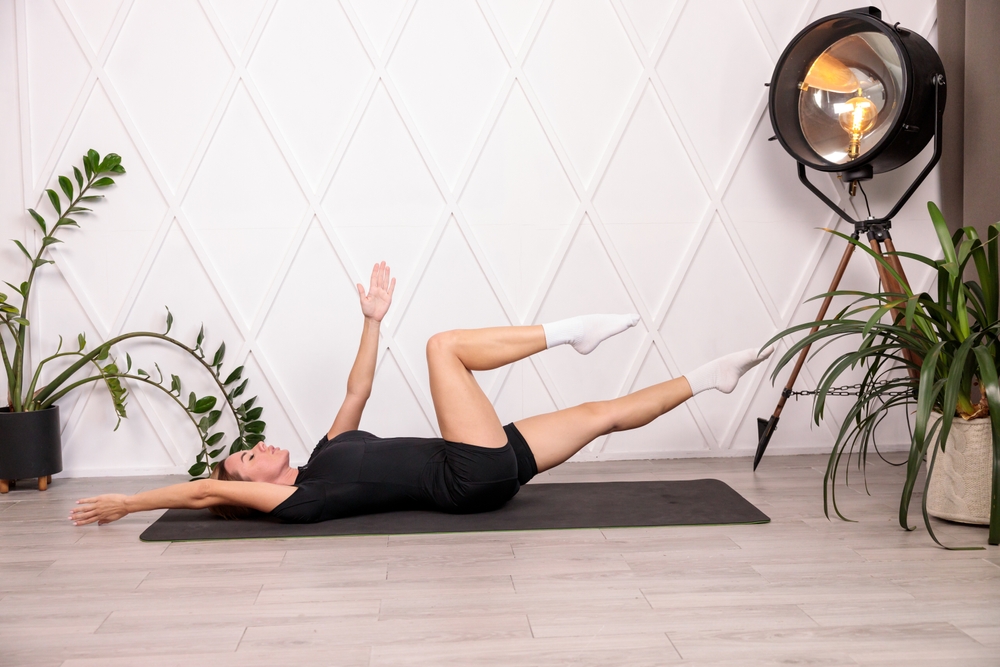
How to do it:
- Lie on your back with your arms pointing toward the ceiling.
- Bend your knees to approximately 90 degrees, keeping your shins parallel to the floor.
- Gently tighten your stomach muscles and keep your lower back pressed against the floor.
- Slowly extend your left leg forward while reaching your right arm overhead.
- Bring both limbs back to the starting position.
- Switch sides and continue alternating.
Make it easier: Move only your legs or only your arms until you feel comfortable coordinating both.
Focus on: Keeping your lower back from lifting away from the floor.
2. Glute Bridge
Credit: Shutterstock
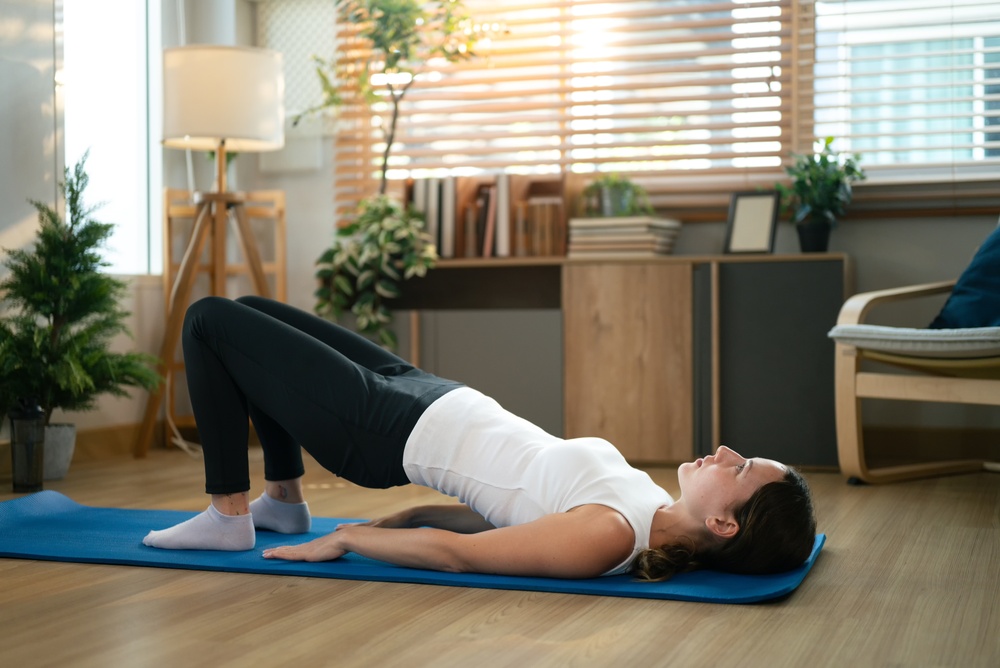
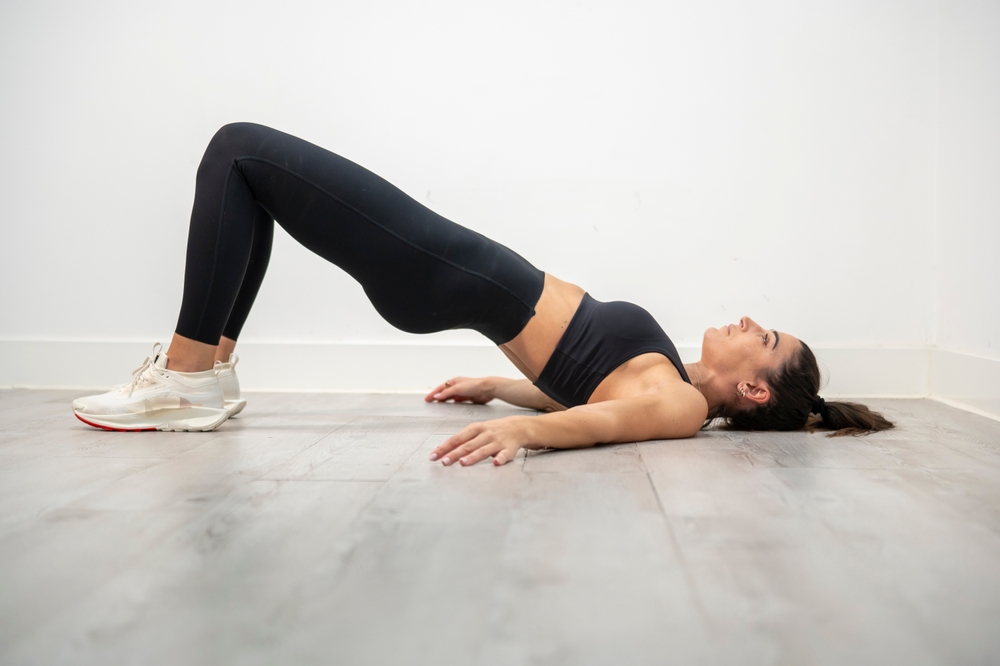
This exercise targets your glutes while also asking your core to help stabilize your pelvis.
How to do it:
- Lie on your back with your knees bent and feet flat on the floor.
- Position your feet about hip-width apart.
- Tighten your abdominal muscles and squeeze your glutes.
- Press through your feet to raise your hips toward the ceiling.
- Stop when your body forms a comfortable line from your shoulders toward your knees.
- Pause briefly at the top, then lower your hips slowly.
Remember: Higher isn’t always better. Avoid pushing your hips so high that your lower back arches excessively.
3. Bird Dog
Credit: Shutterstock
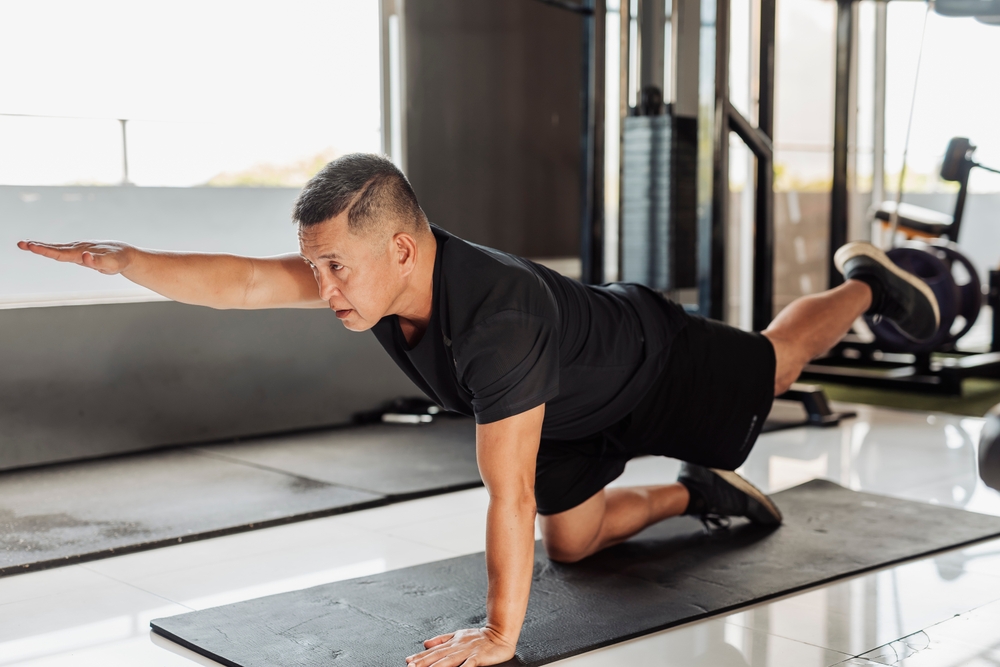
The bird dog is a simple stability exercise that teaches you to keep your torso steady while your arms and legs move.
How to do it:
- Start on your hands and knees.
- Keep your wrists underneath your shoulders and your knees underneath your hips.
- Look down so your neck stays aligned with your spine.
- Extend your left arm forward while stretching your right leg backward.
- Pause for a moment while keeping your hips as level as possible.
- Return to the starting position and switch sides.
Beginner tip: If balancing both limbs feels difficult, practice by lifting one arm or one leg at a time.
4. Bear Plank With Knee Taps
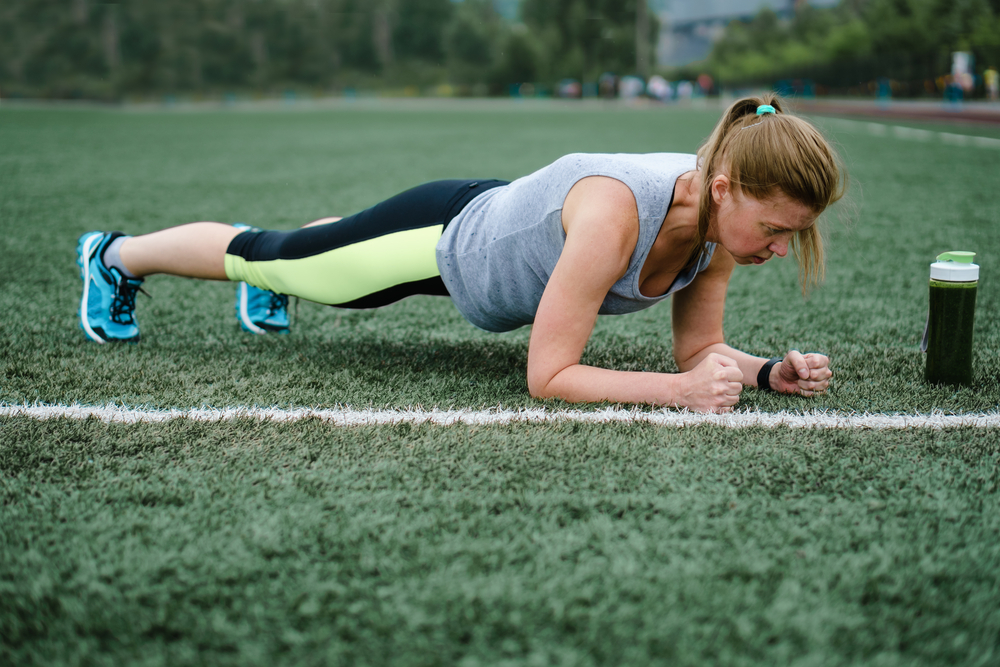
Credit: Shutterstock
Ready for a little more challenge? This move adds an extra stability demand while keeping the exercise relatively simple.
How to do it:
- Begin on your hands and knees.
- Place your hands underneath your shoulders and your knees underneath your hips.
- Brace your stomach as though you’re preparing for a gentle punch.
- Lift your knees about an inch off the floor.
- While maintaining this position, gently tap one knee toward the floor.
- Return it to the starting position and switch sides.
- Keep your back as steady as possible throughout the movement.
Wrist discomfort? Try making gentle fists and supporting yourself on your knuckles, provided that feels comfortable and stable.
5. Modified Side Plank
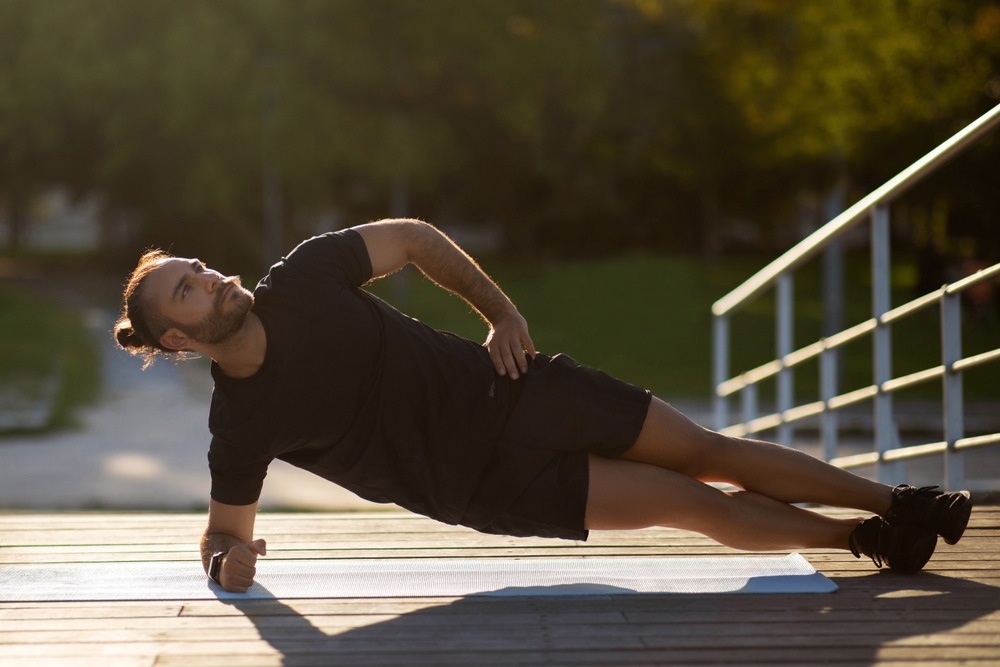
Credit: Shutterstock
Side planks are excellent for challenging the muscles responsible for keeping your torso stable. This beginner-friendly version uses your knees for additional support.
How to do it:
- Lie on your right side with your knees bent.
- Place your right forearm on the floor with your elbow directly beneath your shoulder.
- Tighten your core and gently press through your forearm and lower knee.
- Lift your hips from the floor.
- Keep your head, torso, and hips aligned.
- Hold for about 30 to 45 seconds, or for as long as you can maintain good form.
- Lower yourself carefully and repeat on the opposite side.
Too difficult? Hold the position for 10 to 15 seconds, rest, and repeat rather than forcing yourself to maintain the full duration.
How to Make These Seven Minutes Count?
Core workouts aren’t about racing through repetitions. For beginners, control is more valuable than speed.
Try these simple strategies:
- Keep your breathing steady instead of holding your breath.
- Move slowly enough to maintain proper alignment.
- Stop or modify an exercise if you experience sharp or unusual pain.
- Take a short rest whenever your form starts breaking down.
- Focus on keeping your abdominal muscles gently engaged throughout each movement.
You can also adjust the workout to your current fitness level. If you’re brand-new to exercise, start with shorter holds and fewer repetitions. As the movements become easier, gradually increase the duration or repetitions.
How Often Should Beginners Train Their Core?
You don’t need to train your abs every day to see progress. Add this short routine to a balanced exercise schedule that includes cardiovascular activity and resistance training for your major muscle groups.
Consistency matters more than squeezing in an intense core session once in a while. A seven-minute routine that you can realistically repeat several times a week can be a much better starting point than an exhausting workout you don’t enjoy.
The Takeaway
A strong core isn’t simply about getting more definition around your stomach. Your core muscles help stabilize your body, support movement, and contribute to balance and posture.
This seven-minute beginner routine gives you five straightforward exercises to practice those skills without requiring gym equipment. Start slowly, prioritize good form, and give yourself time to build strength.
Seven minutes may not sound like much, but for an absolute beginner, it’s a simple and manageable way to start making core strength part of your fitness routine.