Credit: Shutterstock
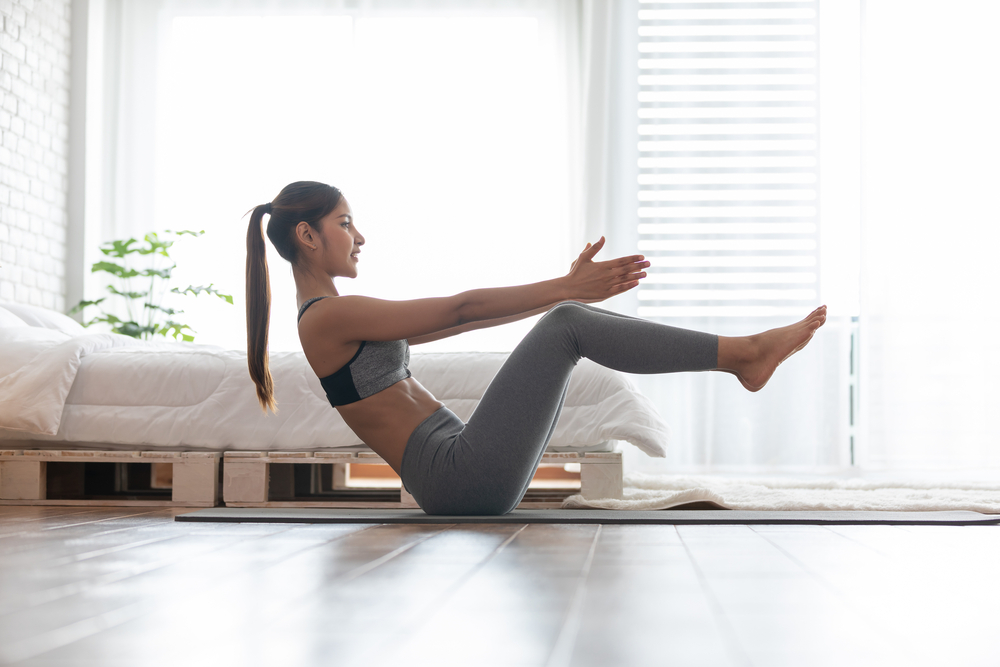
You do not need a fancy studio, reformer machine, or even a huge workout space to enjoy Pilates. Sometimes, all you need is a little room beside your bed, comfortable clothes, and a few quiet minutes.
Pilates is all about controlled movement, core stability, posture, breathing, and flexibility. Many beginner-friendly moves can be performed on a mat or carpeted bedroom floor, making it an easy option for days when getting to the gym feels like too much effort.
Before starting, clear enough floor space to move your arms and legs comfortably. A yoga or exercise mat is ideal, but a firm carpet can also work. Focus on slow, controlled movements rather than rushing through repetitions.
1. Pelvic Tilts
Pelvic tilts are a simple way to warm up your core and become more aware of your spine.
How to do it:
- Lie on your back with your knees bent and feet flat on the floor.
- Keep your feet about hip-width apart and let your arms rest beside you.
- Gently tilt your pelvis so your lower back moves toward the floor.
- Slowly release back to a neutral position.
- Repeat 8 to 10 times.
Keep the movement small and controlled. Think of your pelvis as a bowl that you are gently tipping forward and backward.
2. Single-Leg Heel Slides
This beginner-friendly Pilates move works your abdominal muscles while also challenging pelvic control.
How to do it:
- Start on your back with both knees bent and feet flat.
- Find a comfortable neutral spine position.
- Engage your core gently while continuing to breathe.
- Slowly slide one heel away from you until the leg is nearly straight.
- Slide it back to the starting position.
- Switch legs and repeat 8 to 10 times per side.
The key is keeping your pelvis steady instead of allowing your hips to rock from side to side. Heel slides are also a useful lower-intensity alternative to more demanding leg exercises.
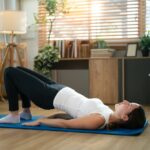
3. Glute Bridge
Want to wake up your glutes after spending too much time sitting? Add bridges to your bedroom routine.
How to do it:
- Lie on your back with your knees bent and feet flat.
- Place your arms beside your body.
- Press your feet gently into the floor.
- Lift your hips until your body forms a comfortable diagonal line from your shoulders toward your knees.
- Pause briefly at the top.
- Lower your hips slowly.
- Repeat 10 to 12 times.
Try not to push your hips excessively high. The goal is controlled movement, not creating the biggest possible arch in your back.
4. Knee Folds
This deceptively simple move is excellent for practicing core control without needing complicated equipment.
How to do it:
- Lie on your back with your knees bent and feet on the floor.
- Gently engage your abdominal muscles.
- Slowly lift one foot from the floor, bringing the knee toward a tabletop position.
- Place the foot back down with control.
- Repeat with the opposite leg.
- Continue alternating for 8 to 10 repetitions per side.
Your hips should stay as still as possible. If your pelvis starts rocking, make the movement smaller.
5. Spine Curl
A gentle spine curl adds movement through your back while also working your core and hips.
How to do it:
- Lie on your back with your knees bent and feet flat.
- Keep your arms relaxed beside you.
- Exhale and gently tuck your pelvis.
- Slowly peel your spine away from the floor, lifting your hips.
- Pause for a moment.
- Roll back down gradually, placing your spine onto the floor one section at a time.
- Repeat 6 to 8 times.
Move slowly enough that you can feel each part of the movement. Pilates emphasizes controlled positioning, breathing, and maintaining good alignment rather than simply completing as many repetitions as possible.
6. Side-Lying Leg Lifts
This one is perfect when you want to work your hips and outer thighs without jumping or making much noise.
How to do it:
- Lie on one side with your legs extended.
- Support your head with your lower arm or rest it on a pillow.
- Keep your hips stacked and your torso steady.
- Slowly lift the upper leg without rotating your toes toward the ceiling.
- Lower it with control.
- Complete 10 to 12 repetitions, then switch sides.
Keep the range of motion comfortable. You do not need to lift your leg extremely high to make the exercise effective.
7. Swimming Prep
You do not need a swimming pool for this Pilates-inspired exercise. This floor move challenges your back, glutes, and core while encouraging coordination.
How to do it:
- Lie on your stomach with your legs extended behind you.
- Stretch your arms forward.
- Gently engage your core.
- Lift one arm and the opposite leg slightly from the floor.
- Lower them with control.
- Alternate sides.
- Continue for 8 to 10 repetitions per side.
Keep the lifts small at first. If your lower back feels uncomfortable, reduce the range of motion or skip this exercise.
Turn These Moves Into a Quick Bedroom Workout
You can combine all seven exercises into a simple routine:
Beginner routine
- Pelvic tilts – 10 reps
- Heel slides – 8 reps per side
- Glute bridges – 10 reps
- Knee folds – 8 reps per side
- Spine curls – 6 reps
- Side-lying leg lifts – 10 reps per side
- Swimming prep – 8 reps per side
Rest for 30 to 60 seconds whenever you need it. As you become more comfortable, you can repeat the sequence for a second round.
Remember that Pilates is not about rushing. Breathing steadily and maintaining control throughout each movement are important parts of the practice.
Make Your Bedroom Floor Your Mini Studio
The biggest advantage of a bedroom Pilates routine is how easy it is to start. You can do a few moves after waking up, during a work break, or before getting ready for bed. You do not need to dedicate an entire hour to make movement part of your day.
Start with manageable repetitions, concentrate on your form, and gradually build up as the exercises become easier. If an exercise causes pain rather than normal muscular effort, stop. Anyone with an injury, health condition, recent surgery, or other concerns should check with a healthcare professional before starting a new exercise routine.
Sometimes, the best workout is simply the one you can actually fit into your day—and your bedroom floor may be all the equipment you need.