
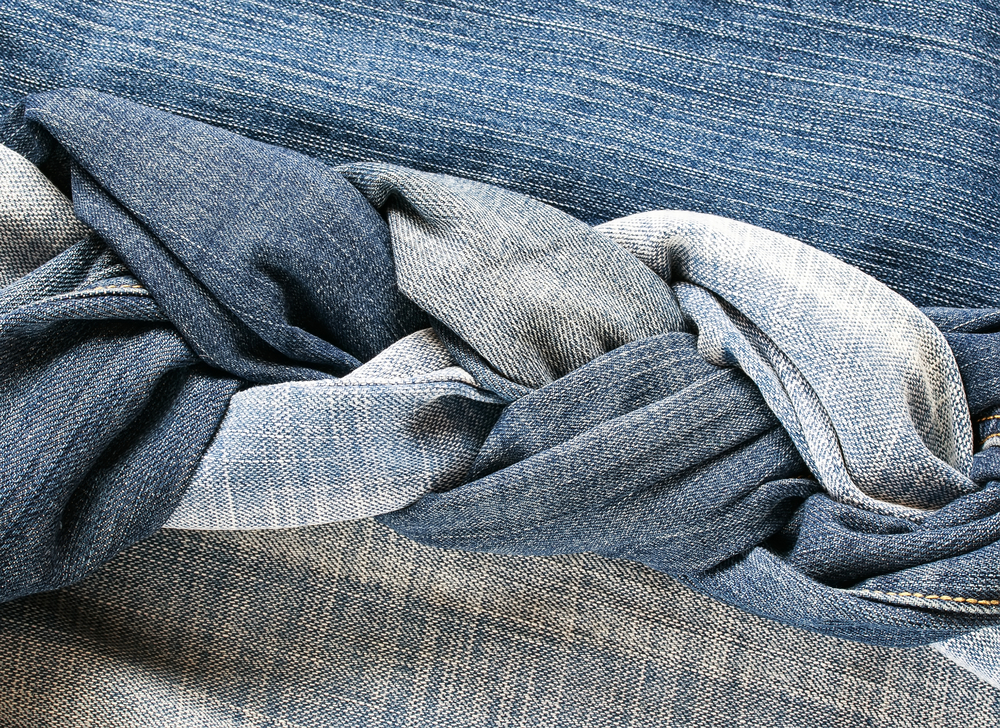
Credit: Shutterstock
That pile of jeans you’ve been meaning to donate for the last two years? Don’t give it away just yet. One of 2026’s biggest home decor movements is all about turning worn-out denim into something you’d actually be proud to show off — and it’s not another tote bag or pair of cutoffs. It’s a rug.
Braided denim rugs have quietly taken over Pinterest boards and cozy-home feeds this year, and it makes total sense once you think about it. Homes are leaning hard into texture, imperfection, and pieces that feel handmade rather than mass-produced, and nothing says “made with actual effort” quite like a rug woven from your own closet history. It’s sustainable, it’s nearly free, and it’s the kind of project that turns a boring Saturday into something you’ll step on and smile at for years.
Here’s everything you need to know to make one yourself.
Why This Trend Is Having a Moment
A few things are colliding to make denim rugs the it-project of the year. Sustainability is no longer a nice-to-have in home design — it’s the point. More people want their homes to feel personal and a little imperfect instead of catalog-perfect, and raw, textured, handcrafted pieces are exactly what’s filling that need. Add in the fact that almost everyone has a drawer (or three) of jeans they’ll never wear again, and you’ve got a project that costs you basically nothing but time.
There’s also something satisfying about the process itself. Braiding is repetitive and a little meditative, which fits right into the broader shift toward slow, screen-free hobbies that people are craving after years of doom-scrolling.
What You’ll Need
- 4–6 pairs of old jeans (the more color variation, the more interesting the finished rug looks)
- Sharp fabric scissors or a rotary cutter
- A ruler or measuring tape
- A heavy-duty needle (a curved upholstery needle makes life much easier)
- Strong thread — upholstery or button thread holds up best
- Straight pins
- Optional: a rubber or non-slip rug pad, especially if it’s going on hardwood or tile
Skip the jeans with paint stains or holes right through the fabric, but don’t worry about fading, small rips, or mismatched washes — those actually add character once everything’s braided together.
How to Make It, Step by Step
1. Cut your strips. Lay each pair of jeans flat and cut them into long strips, roughly 2 to 3 inches wide. Denim is thicker than most rug-making fabric, so err on the wider side — thin strips are harder to braid neatly and tend to fray faster. Cut with the grain of the fabric when you can; it keeps the strips from twisting oddly as you work.
2. Fold the raw edges in. Fold each strip lengthwise so the raw, fraying edges tuck inside, like you’re making bias tape. Pin or press as you go. This step takes patience, but it’s what gives the finished rug that clean, rounded look instead of a fuzzy, unraveling one.
3. Join your strips into three long lengths. You’ll be working with three strands at a time, so sew shorter strips end-to-end (at a slight diagonal, not straight across) to build three long, continuous lengths. Stagger where each strand’s seams fall so you don’t end up with a bulky, lumpy spot where all three seams line up at once.
4. Start braiding. Sew the three strands together at one end, then pin that starting point to something sturdy — the arm of a couch works great — so you have tension to braid against. Keep the braid tight and flat, folding each strip over neatly rather than just twisting it into place. Loose, sloppy folds now mean a lumpy rug later.
5. Coil and stitch as you go. Once you’ve got a length of braid, start coiling it into a spiral, sewing the coils together as you add each new loop. Stitch through the outer edge of each round, keeping your thread as close to the denim color as possible so it blends in rather than standing out. Keep checking that the rug is lying flat — if it starts to cup or ruffle at the edges, your braid is too tight; if it won’t stay flat and starts to wave, it’s too loose.
6. Keep going until it’s the size you want. Circular, oval, and even rectangular rag-rug shapes are all doable with this method — just adjust how you coil the braid. When you reach your desired size, tuck the tail end of the braid under and stitch it down securely.
7. Add grip on the bottom. If your rug is going on a hard floor, flip it over and attach a thin rubber rug pad or a few strips of non-slip shelf liner to the back so it doesn’t slide around.
Where to Put It
These rugs are sturdy, textured, and genuinely soft underfoot once they’re finished, which makes them great for spots that see a lot of foot traffic and could use a little visual warmth: in front of the kitchen sink, beside the bed, at the entryway, or tucked in front of a reading nook (another huge trend this year — pair the two and you’ve basically nailed 2026 in one corner of your house).
A Few Ways to Make It Your Own
- Go monochrome by sticking to similar denim washes for a subtle, tonal look, or go bold by mixing light, dark, and colored denim for a patchwork effect.
- Blend in other fabrics, like old flannel shirts or cotton scraps, to soften the look and stretch your denim supply further.
- Skip the sewing machine entirely — this whole project can be done by hand, which makes it an easy one to work on while watching TV.
- Save leftover scraps and pockets. Extra denim strips make great coasters, and pockets can be repurposed into small wall organizers — a nice bonus project once your rug is done.
The Bottom Line
A braided denim rug isn’t a quick weekend craft — depending on the size, it might take you a few evenings spread over a week or two — but it’s hard to beat the payoff. You get a one-of-a-kind piece with a story behind it, you keep a few more pairs of jeans out of a landfill, and you get to say “I made this” every single time someone compliments your floor. In a year where handmade and imperfect are the whole point, that’s about as on-trend as it gets.