
Credit: Shutterstock
If there’s one exercise that deserves a permanent spot in almost every fitness routine, it’s the squat. Simple, effective, and requiring little to no equipment, squats help build lower-body strength while making everyday movements easier and more comfortable.
From picking up a dropped item to sitting down in a chair or reaching for groceries on a lower shelf, squats mimic many of the motions we perform daily. The best part? They offer benefits that go far beyond stronger legs.
Why Squats Are So Effective
Squats are considered one of the most functional exercises because they train multiple muscle groups at the same time. Instead of isolating a single area, a squat engages the body in a coordinated movement pattern that improves strength, balance, and mobility.
Muscles Worked During a Squat
When you perform a squat, several key muscles work together:
- Glutes (butt muscles): Particularly the gluteus maximus, which is the largest muscle in the body.
- Quadriceps: The muscles at the front of your thighs that help extend the knees.
- Calves: Especially the soleus muscle, which helps stabilize movement.
- Hamstrings: Located at the back of the thighs and assist with hip movement.
- Core muscles: Your abdominals help keep your torso stable throughout the exercise.
- Inner and outer thighs: These muscles support balance and proper alignment.
Because so many muscles are involved, squats are one of the most efficient strength-training exercises you can do.
Top Benefits of Doing Squats
1. Stronger Glutes for Better Movement
Strong glutes are essential for activities such as walking, running, climbing stairs, and lifting objects. Regular squats help strengthen these muscles, improving both athletic performance and everyday mobility.
Whether you’re carrying groceries, playing sports, or simply moving around throughout the day, stronger glutes can make a noticeable difference.
2. Improved Functional Fitness
One of the greatest advantages of squats is that they train your body for real-life movements. The ability to lower yourself down and stand back up comfortably becomes increasingly important as you age.
Developing leg strength and mobility through squats can make daily activities easier and help maintain independence over time.
3. Healthier Bones and Joints
Squats are a weight-bearing exercise, which means they encourage the body to maintain and build bone density. This can contribute to stronger hips, knees, and legs while supporting long-term bone health.
Regular strength training may also help reduce the risk of age-related bone loss.
4. Increased Calorie Burn
Because squats recruit large muscle groups simultaneously, they require significant energy. As a result, they can help increase calorie expenditure during workouts and support overall fitness goals.
The more muscle groups involved in an exercise, the greater the potential calorie burn—and squats certainly fit that category.
5. Potential Brain Health Benefits
Emerging research suggests that lower-body strength may be linked to healthier brain function over time. Stronger leg muscles have been associated with better cognitive health and reduced signs of brain aging.
While squats aren’t a magic solution, they can be a valuable part of an active lifestyle that supports both physical and mental well-being.
Are Squats Safe for Everyone?
For most healthy individuals, squats are a safe and effective exercise. However, people with knee, hip, back, or other mobility-related issues may need to adjust their technique or choose a modified version.
Popular squat variations include:
- Bodyweight Squat
- Box Squat
- Goblet Squat
- Jump Squat
- Overhead Squat
- Pistol Squat
The goal is to find a version that allows you to move comfortably without pain. If you have a medical condition, are recovering from an injury, or are pregnant, it’s wise to consult a healthcare professional or qualified fitness trainer before adding squats to your routine.
How Often Should You Do Squats?
Current fitness guidelines recommend strength training all major muscle groups at least two days per week.
For beginners, performing 1–3 sets of 8–12 repetitions is a practical starting point. As strength and fitness improve, you can adjust the number of sets, repetitions, and intensity based on your goals.
Remember that recovery is just as important as training. Allow your muscles enough time to rest between challenging lower-body workouts.
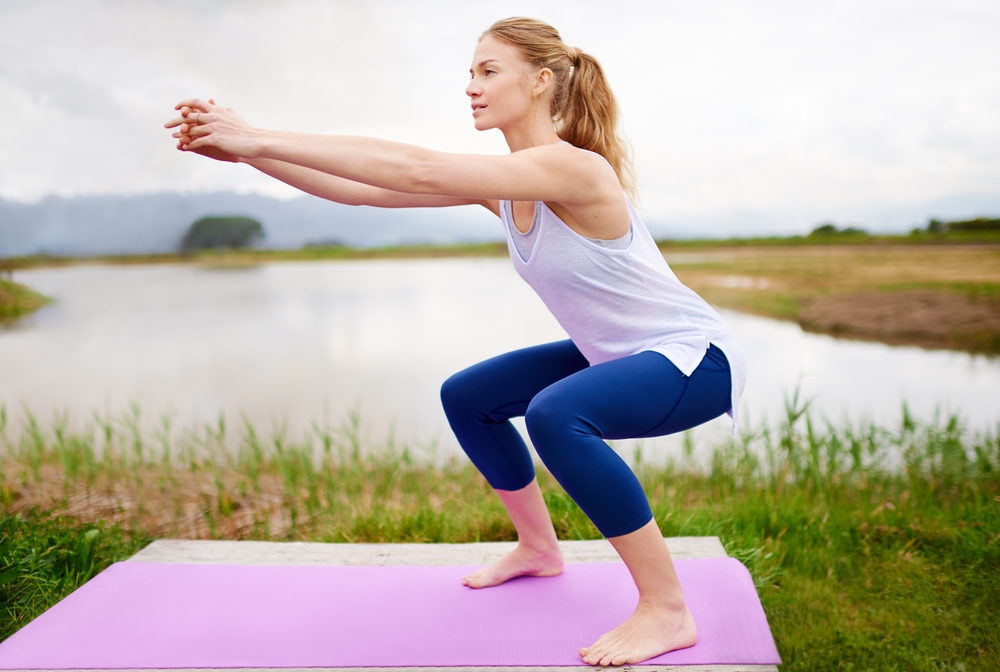
How to Perform a Perfect Bodyweight Squat
Proper technique helps maximize results while reducing the risk of injury.
Step 1: Set Your Stance
Stand with your feet about shoulder-width apart. Point your toes forward or slightly outward, whichever feels most comfortable.
Step 2: Lower Your Body
Push your hips back as though you’re about to sit in a chair. Bend your knees while keeping your chest lifted and your heels firmly planted on the floor.
Make sure your knees track in line with your toes rather than collapsing inward.
Step 3: Reach a Comfortable Depth
Lower yourself as far as you can while maintaining good form. For some people, this may mean thighs parallel to the floor, while others may stop higher.
Quality of movement is more important than depth.
Step 4: Stand Back Up
Press through your feet and drive your hips forward to return to the starting position.
Step 5: Repeat
Perform your desired number of repetitions while maintaining control throughout the movement.
Common Squat Mistakes to Avoid
To get the most from your squats, watch out for these common errors:
- Allowing knees to cave inward
- Lifting heels off the ground
- Rounding the lower back
- Looking down excessively
- Moving too quickly and sacrificing control
Focusing on proper form will help you build strength safely and effectively.
The Bottom Line
Squats are one of the most valuable exercises you can add to your fitness routine. They strengthen your glutes, legs, and core, improve balance and mobility, support bone health, and can even contribute to long-term brain wellness.
Best of all, squats train your body for the movements you use every day. Whether your goal is to become stronger, move better, stay active as you age, or simply improve overall fitness, squats are a powerful exercise that delivers lasting benefits.
Start with proper form, stay consistent, and you’ll soon discover why squats remain a favorite among fitness professionals and beginners alike.