Credit: Shutterstock
The timeless influence of France’s last queen who turned fashion into power and left an everlasting mark on pop culture.
Over two centuries after her death, Marie Antoinette still reigns supreme — not over France, but over fashion. From Kylie Jenner’s pastel wigs to Rihanna’s Rococo-inspired athleisure, the “teen queen” of Versailles continues to shape the modern imagination. She may have lost her head, but her style? Never.
The Queen Who Started It All
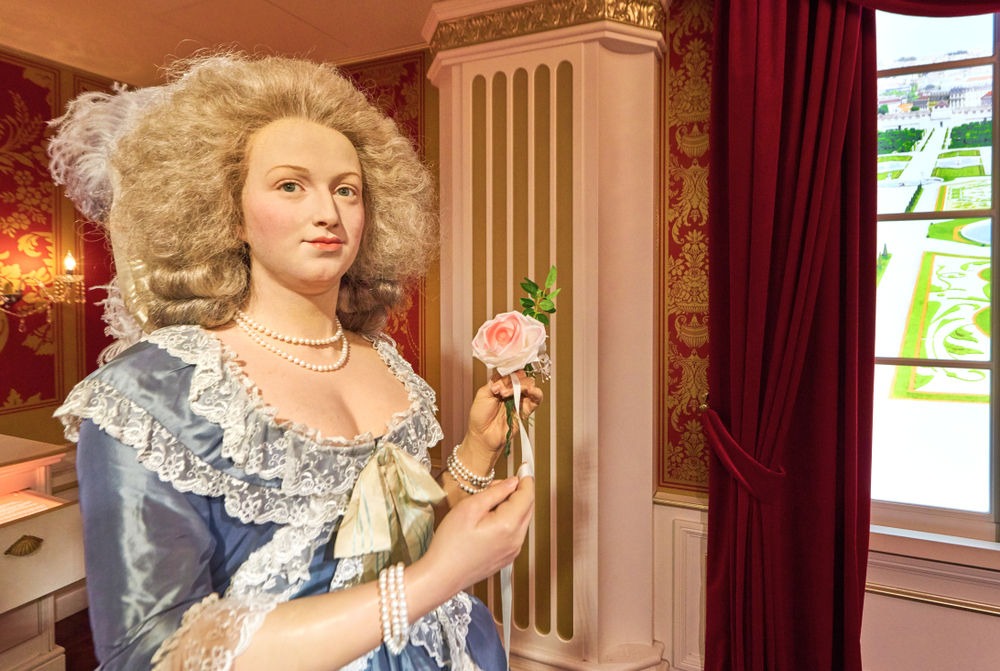
When Marie Antoinette arrived at the French court as a 14-year-old bride, she was more than just a royal import from Austria — she was a fashion revolution waiting to happen. With her taste for elaborate gowns, sky-high wigs, and pastel perfection, she transformed the stiff world of French court dressing into a theater of fantasy. Her personal dressmaker, Rose Bertin, became the first true “celebrity stylist,” and Versailles turned into the original runway.
Antoinette’s daring choices made her both adored and despised. She pushed boundaries, wearing lighter fabrics and playful silhouettes that broke tradition — the 18th-century version of casual chic. Her style influence was so strong that it even set economic trends across Europe. In today’s world, we’d probably call her the first influencer.
A Modern-Day Muse
Fast-forward to the 21st century, and Marie Antoinette’s spirit is alive and thriving in pop culture. Madonna channeled her in a bejeweled corset and powdered wig at the 1990 MTV Video Music Awards, fan-dancing to “Vogue.” Since then, countless pop icons — from Katy Perry to Chappell Roan — have followed suit, dressing up as the queen of excess to celebrate empowerment, femininity, and rebellion.
Designers, too, can’t resist her allure. John Galliano’s Dior couture collections were drenched in Antoinette’s lavish spirit, Karl Lagerfeld found endless inspiration in her ornate elegance, and Jeremy Scott’s Moschino turned her love of decadence into candy-colored mini dresses. Even Rihanna wondered what the queen might wear to the gym for her 2016 Fenty x Puma line — proving that Antoinette’s aesthetic fits every era.
A Story of Glamour and Grit
The Victoria & Albert Museum’s new exhibition in London invites visitors to step into Antoinette’s glittering yet tragic world. Through over 250 objects — from sparkling jewels she packed before her attempted escape to her worn prison garments — the show reveals the full arc of her story. The scent of her favorite perfumes fills the air, but so too does the recreated stench of the Seine river outside her cell, grounding her glamour in the harsh reality of her fall from grace.
It’s this blend of beauty and tragedy that keeps her legacy so compelling. Once vilified as frivolous and detached, recent portrayals — like Antonia Fraser’s sympathetic biography and Sofia Coppola’s dreamy 2006 film — have reimagined her as a misunderstood young woman trapped by circumstance. Kirsten Dunst’s portrayal captured her loneliness and longing, turning the infamous “Let them eat cake” queen into a relatable, if misunderstood, icon of youth and excess.
The Fashion of Fantasy
Today, Marie Antoinette isn’t just a queen from history — she’s an idea. Her image embodies everything fashion strives to balance: extravagance and rebellion, beauty and vulnerability, indulgence and critique. Whether she’s inspiring runway collections, costume parties, or music videos, her name has become shorthand for the power of style itself.
As designer Jeremy Scott once said, “That maximalism, that frivolousness, that panache — there’s a joy to it.” And maybe that’s the secret to her enduring reign. Marie Antoinette’s fashion wasn’t just about opulence; it was about self-expression in a world that tried to control her.
Over 230 years later, we’re still captivated by the queen who made style her crown — and in doing so, became the most fashionable monarch in history.